A Cool Village Innovation in Gresik Transforms Barren Land into Agrotourism, Fruit Picking, and an Art Gallery
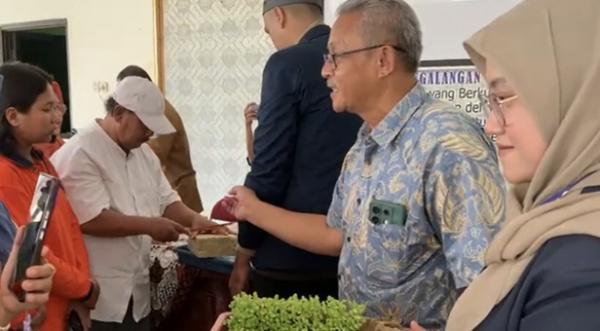
An interesting story emerges from Pengalangan Village, Menganti District, Gresik Regency. The once barren village has now transformed into a successful example of an independent village based on a green economy. The village, which once had barren land, has been transformed into an Educational Tourism and Fresh Market area thanks to the collaboration of Wijaya Putra University (UWP), UHW, the village government, the Pengalangan Sejahtera Village-Owned Enterprise (BUMDes), and the Family Welfare Movement (PKK) group.
Since 2019, 2.8 hectares of Village Treasury Land (TKD) have been transformed into a modern agro-tourism area. Hundreds of starfruit, crystal guava, mango, and longan trees are thriving and attracting fruit-picking tourists. Furthermore, the area is equipped with hydroponic installations, freshwater fish farming such as catfish and tilapia, and training areas for entrepreneurship, digital marketing, product packaging, and financial accounting.
The head of the UWP implementation team, Suprayoga, stated that this program is not just a tourism village project, but a foundation for community independence. "We are promoting Pengalangan Village as a role model for a green economy based on local potential. The support of the Family Welfare Movement (PKK), youth, and Village-Owned Enterprises (BUMDes) is key to success," he emphasized.
Faisol Humaidi, a lecturer at UWP and directly involved in the program, echoed this sentiment. He believes this collaboration is long-term. "This initiative has proven to have a real impact. The model developed in Pengalangan Village can be replicated in other regions in Indonesia," he said.
Meanwhile, Dian Oktarina, a lecturer at Hayam Wuruk University (UHW) Perbanas Surabaya, emphasized the importance of empowering women and MSMEs. Through intensive mentoring, the PKK group has successfully developed various superior products, from Pengalangan's signature pecel seasoning, food souvenirs, large-scale picture frames, and plans for a painting gallery in the agro-tourism area. "We want village women to be more active in the local economy. Their processed products now have market value and competitiveness," she said.
In addition to agricultural and MSME education, the development of local arts and culture is also part of the agro-tourism program. Tourists will be able to enjoy gamelan performances at the temple and other educational tour packages. The three implementing lecturers agreed that this program aligns with the Sustainable Development Goals (SDGs), particularly in terms of poverty alleviation, gender equality, and sustainable consumption and production.
Not only does this program benefit residents, it also provides a space for students to apply their knowledge in real-world settings through Independent Community Service (PMM) activities. Going forward, Pengalangan Village is expected to continue to inspire national growth as an independent, green economy-based village, not only strengthening food security and the local economy but also creating a model village for Indonesia.